If you’ve ever driven a car with an automatic transmission, you know how easy it feels. You just press the gas pedal and go! No shifting gears by hand, no worrying about stalling.
But have you ever wondered what’s happening under the hood to make driving so smooth?
One important part behind the scenes is the torque converter. It’s a small but powerful component that plays a huge role in how your car moves. Let’s break it all down in a simple way!
What Is a Torque Converter?
At its core, a torque converter is a fluid coupling device. It connects the engine to the transmission and helps pass power from one to the other.
In a manual car, you have a clutch that the driver controls. In an automatic car, the torque converter automatically manages this connection — no need for the driver to do anything!
It allows your engine to keep running even when your car is stopped. Without it, your engine would shut off every time you came to a red light. That would make driving pretty frustrating!
Think of the torque converter like a bridge or a middleman. It makes sure the engine and transmission can work together smoothly without any jerky stops or starts.
Key point:
Without the torque converter, your automatic car would not function the way it does today.
Why Is It So Important?
The torque converter isn’t just important — it’s essential for automatic cars. Here’s why:
1. It Keeps the Engine Running at a Stop
When you stop your car at a traffic light, your wheels stop moving — but your engine keeps spinning.
The torque converter allows this by separating the spinning engine from the non-moving wheels.
It’s like giving your car the ability to pause the movement without pausing the engine.
Without this ability, your engine would stall (just like a manual car that stalls when you forget to press the clutch).
2. It Provides Smooth Acceleration
Have you noticed how automatic cars speed up without any jolts? That’s because the torque converter smoothly increases the power sent to the wheels.
Instead of dumping a bunch of power all at once (which would make the car jerk forward), the torque converter controls the flow.
It gives you a nice, even push as you accelerate.
3. It Multiplies Engine Power
Here’s a cool thing: When you start moving from a complete stop, the torque converter actually boosts the engine’s power.
This helps your car move easily, especially when carrying heavy loads or going uphill.
This short-term power boost is called torque multiplication, and it’s one of the reasons automatic cars feel strong when pulling away from a stop.
How Does a Torque Converter Work?
Inside a torque converter, a lot is happening — all based on the movement of fluid!
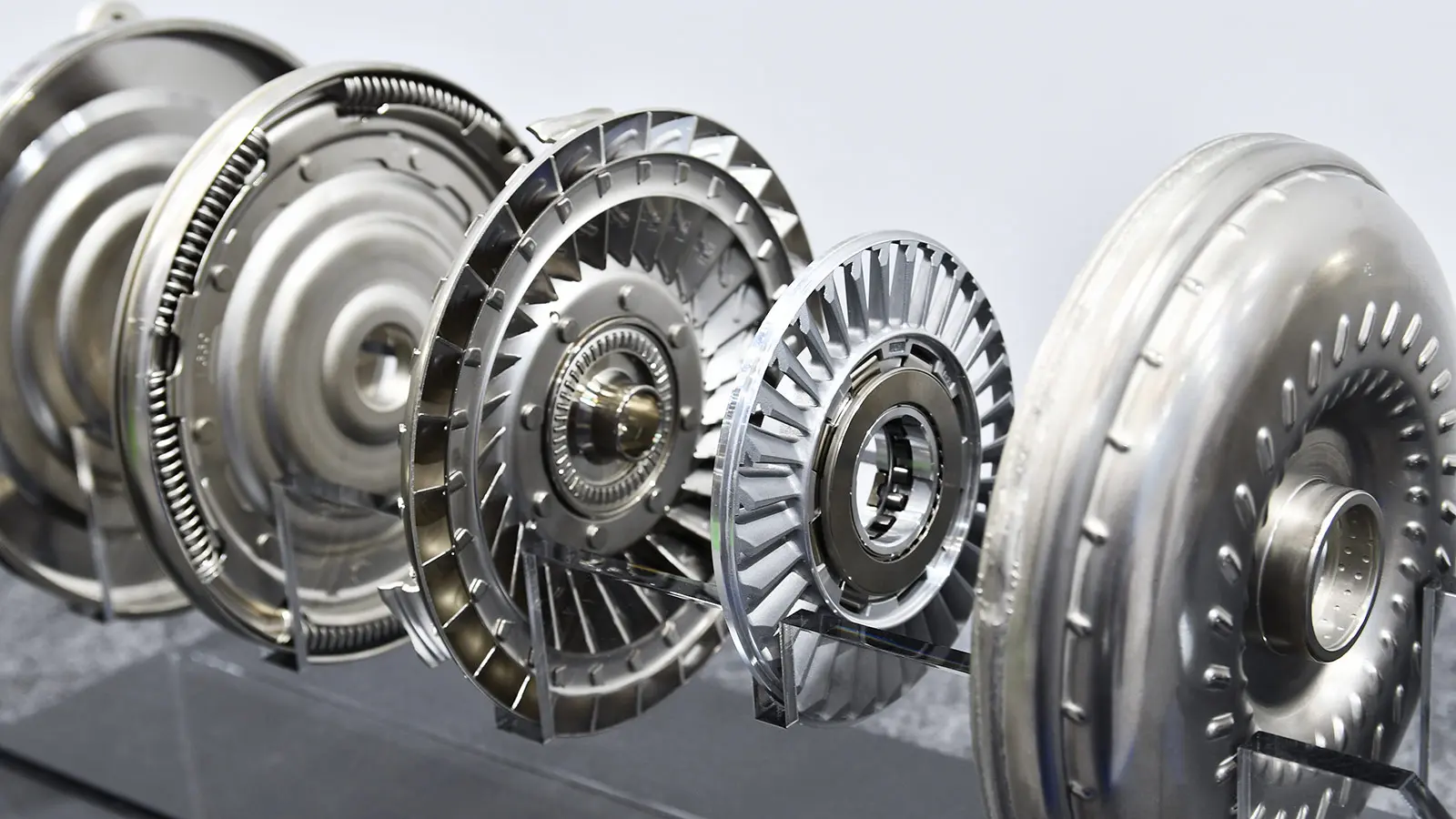
There are three major parts inside:
- Pump (Impeller):
Attached to the engine, the pump spins and pushes transmission fluid outward by centrifugal force.
- Turbine:
Connected to the transmission. When the fluid hits the turbine, it causes the turbine to spin, sending power to the wheels.
- Stator:
Sitting between the pump and turbine, it redirects the fluid after it moves through the turbine, improving the efficiency and giving an extra kick of power when needed.
Imagine you are spraying water at a pinwheel with a hose.
The water makes the pinwheel spin — that’s basically how the pump and turbine work together!
The stator helps recycle the fluid’s energy, making the whole system more powerful and efficient.
Fun fact:
Transmission fluid is crucial for a torque converter to work properly. Without it, the system couldn’t transfer power!
What Happens Inside When You Drive?
Here’s a step-by-step look at what’s going on inside the torque converter at different driving moments:
When You’re Stopped at a Red Light:
- The engine is still running.
- The pump inside the torque converter is spinning.
- The turbine isn’t moving much or is moving very slowly.
- The stator balances the fluid flow, so your car stays still without stalling.
When You Start Moving:
- You press the gas pedal.
- The pump spins faster, pushing fluid more forcefully.
- The turbine catches the moving fluid and starts spinning faster.
- Power flows to the transmission and then to the wheels.
- Your car moves forward smoothly!
When You’re Cruising at High Speeds:
- The pump and turbine spin almost at the same speed.
- Many cars have a lock-up clutch inside the torque converter that engages at high speeds.
- This locks the pump and turbine together for maximum efficiency and better fuel economy.
Common Signs of Torque Converter Problems
Just like any other part of your car, torque converters can have issues over time.
Here are some warning signs to watch for:
1. Slipping
If you step on the gas but the car doesn’t respond the way it should, the torque converter might be slipping.
It feels like the engine is working, but the wheels aren’t getting the message.
2. Shuddering
A bad torque converter can cause your car to shake or vibrate, especially when accelerating or shifting gears.
It might feel like you’re driving over a rough road even when the pavement is smooth.
3. Overheating
Because the torque converter relies on fluid, overheating can be a big problem.
Too much heat can damage the transmission and the converter itself.
4. Strange Noises
If you hear whining, grinding, or clicking sounds from the transmission area, your torque converter might be to blame.
5. Poor Acceleration
If the car feels sluggish or struggles to get going, it could be a sign the torque converter isn’t doing its job properly.
Tip: If you notice any of these signs, it’s a good idea to visit a mechanic quickly. Catching problems early can save you from expensive repairs later!
Can a Torque Converter Be Repaired or Replaced?
Yes! If your torque converter is causing problems, it can either be repaired or replaced.
- Minor issues, like dirty fluid or a clogged filter, might only need a fluid change or cleaning.
- Major problems, like broken internal parts, usually mean the torque converter must be replaced.
Because it’s buried deep inside the transmission system, fixing it usually isn’t a DIY job.
It’s best to let a trained mechanic handle it.
Replacing a bad torque converter can bring back the smooth ride you’re used to — and prevent even bigger transmission damage.
How to Take Care of Your Torque Converter
Good maintenance habits can keep your torque converter (and your entire transmission) healthy for a long time!
1. Check and Change Transmission Fluid
Clean, fresh fluid is key. If the fluid is dark, dirty, or smells burnt, it’s time for a change.
Follow your car’s manual for the recommended schedule — usually every 30,000 to 60,000 miles.
2. Watch for Leaks
Transmission fluid leaks can starve your torque converter of the fluid it needs. If you notice red or brown puddles under your car, get it checked right away.
3. Drive Gently
Hard acceleration and aggressive driving can put extra strain on the torque converter.
Smooth, steady driving helps everything last longer.
4. Service Your Transmission
A full transmission service includes changing the fluid, replacing the filter, and checking the torque converter.
This kind of regular service can prevent many common problems.
Final Thoughts
The torque converter might not be something you see every day, but it’s a hero working behind the scenes.
It makes automatic driving smooth, easy, and powerful without any effort from you.
By understanding what it does, how it works, and how to take care of it, you can keep your car running beautifully for years to come.Next time you press the gas pedal and glide forward without a hitch, remember — your torque converter is working hard to make it all possible!