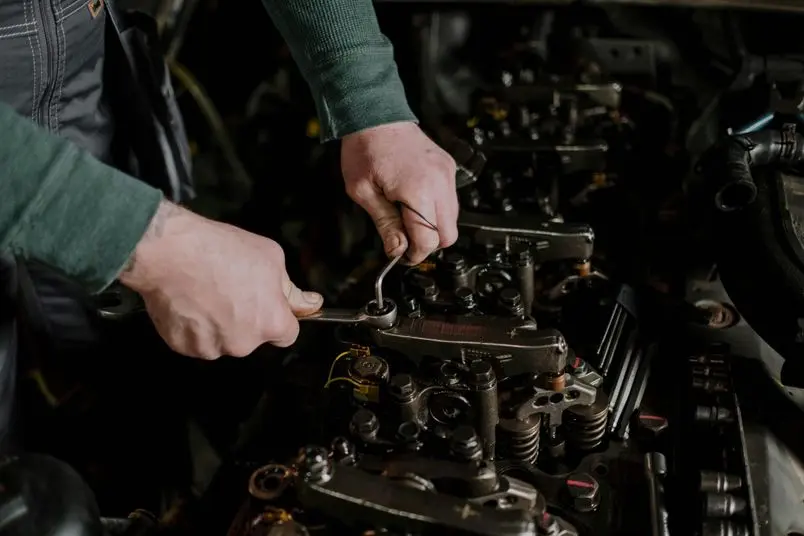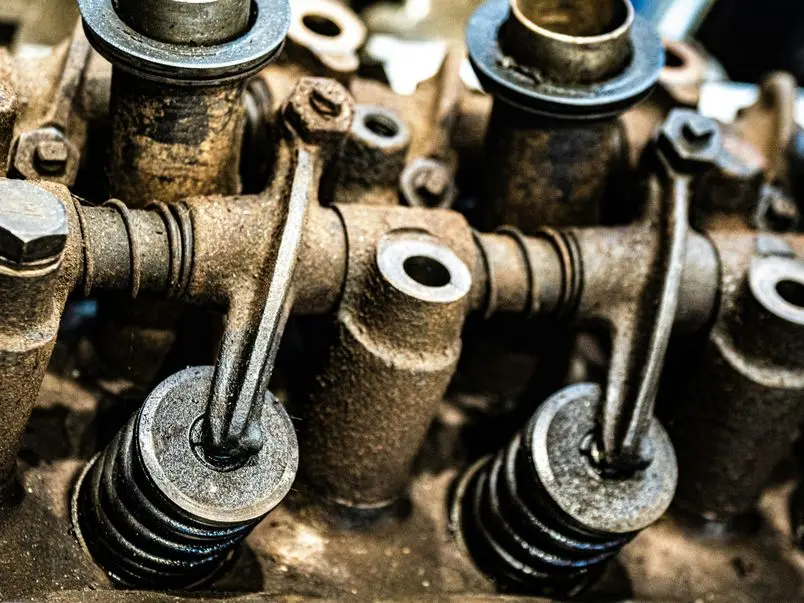
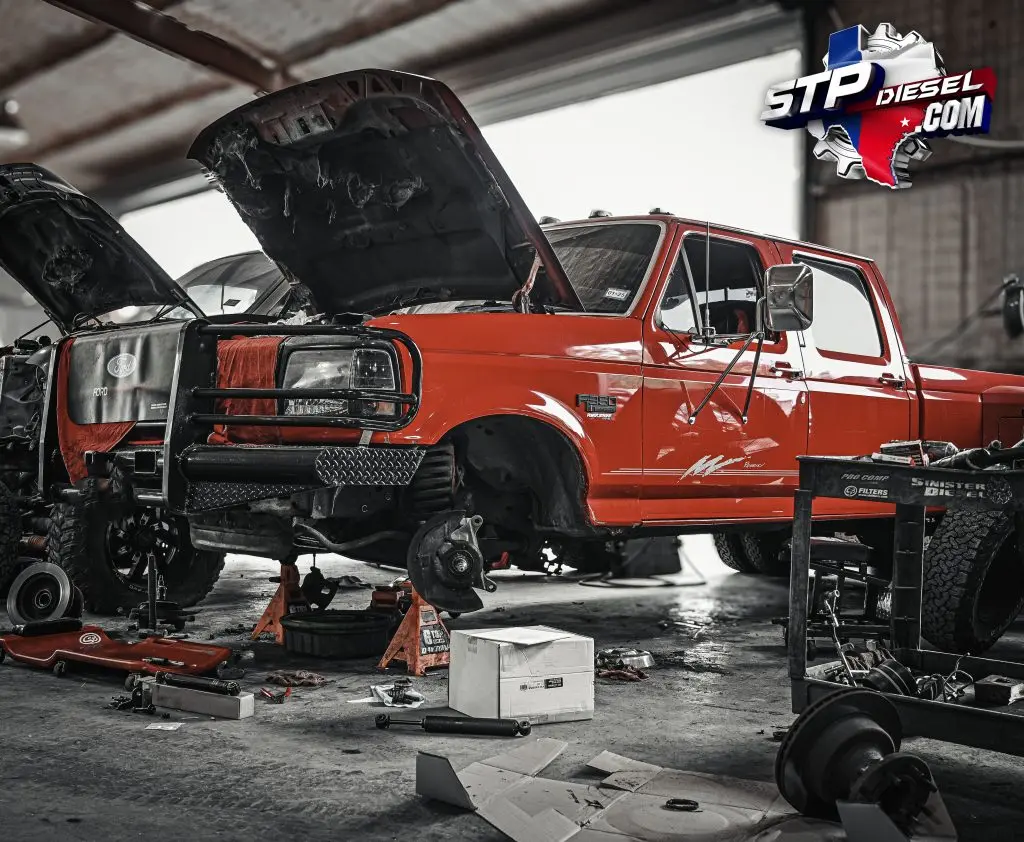
Ford Power Stroke Services Houston, Texas
STP Diesel is Houston’s trusted choice for Power Stroke diesel engine services, providing comprehensive repairs and maintenance to keep your diesel vehicle running at peak performance. Specializing in Power Stroke engines, we understand the unique needs of Ford diesel vehicles and offer expert care for every aspect of your diesel repair and maintenance needs. Our team is committed to quality, ensuring each vehicle that comes through our doors receives top-notch service, from diagnostics to full repairs. Book your next visit to our shop today!
Power Stroke Diesel Engines Explained
The Ford Power Stroke is a powerful and reliable diesel option, renowned for its durability, efficiency, and impressive torque. Found in popular Ford models like the F-Series Super Duty trucks, Power Stroke engines are engineered to handle heavy-duty tasks, making them a favorite among those who rely on their vehicles for both work and play. However, maintaining and repairing these complex diesel engines requires specific knowledge and skill. At STP Diesel in Houston, TX, we have the specialized expertise to keep your Power Stroke engine operating smoothly, ensuring longevity and performance.
Why Is it Important to Entrust Your Diesel Vehicle to a Power Stroke Specialist?
A Power Stroke engine is an advanced piece of machinery, and while it offers powerful performance, it also has specific service and repair needs. Generic auto repair shops may not have the in-depth knowledge needed to fully address issues in Power Stroke engines. Our technicians are Power Stroke specialists, trained to handle the intricacies of diesel repair for Ford Power Stroke engines. Choosing STP Diesel means choosing experts who can diagnose issues accurately, apply correct repairs, and help prevent costly breakdowns.
With our advanced diagnostic tools and deep understanding of Power Stroke engines, we help diesel vehicle owners in Houston, TX get the best out of their vehicles. Whether it’s routine maintenance or complex repairs, our team is equipped to handle it all, saving you time, money, and hassle.
Power Stroke Services We Offer
At STP Diesel, we cover a wide range of Power Stroke maintenance services to keep your engine in excellent condition:
- Check Engine Light Diagnostics: We quickly identify and address issues before they escalate.
- Oil Change: Using high-quality oils designed for diesel engines, we help extend the life of your Power Stroke engine.
- Filter Replacement: Regular filter replacements are essential for maintaining optimal fuel efficiency and performance.
- Fluid Flush and Replacement: We flush and replace old fluids, which is crucial for your engine’s longevity.
- Wheel Alignment: Ensures your vehicle handles correctly and helps maintain even tire wear.
These maintenance services are designed to catch potential issues early and keep your Power Stroke engine in top shape, so you can drive with confidence in Houston, TX and beyond.
Repairs We Perform for Power Stroke Vehicles
Power Stroke engines are built for heavy-duty work, but they still require regular attention and expert repairs. STP Diesel offers a full range of Power Stroke repairs, including:
- Brake Repair: Essential for safety and performance, especially with heavy-duty diesel vehicles.
- Fuel Injector Replacement: Ensures your engine receives the correct amount of fuel for efficient operation.
- Fuel System Repair: We address issues with fuel lines, pumps, and injectors, which are critical for diesel engines.
- Lifter Replacement: Vital for maintaining smooth engine operation and preventing damage to other components.
- Diesel Engine and Transmission Repair: From minor repairs to complete overhauls, we keep your Power Stroke engine and transmission running smoothly.
- Crankcase Breather Replacement: Prevents harmful gases from building up in the engine, which can improve performance and efficiency.
- Glow Plug Replacement: Essential for reliable starts, especially in cold weather.
- Exhaust Gas Recirculation (EGR) System Repair and Replacement: Reduces emissions and keeps your engine running cleanly.
- Electrical System Repair: From sensors to wiring, we diagnose and fix electrical issues that can affect engine performance.
- Turbo Replacement: Ensures your Power Stroke engine maintains power and efficiency.
- Lift Kits: For those wanting added ground clearance and performance, we install and service lift kits.
Each of these services is handled by trained technicians who know Power Stroke engines inside and out. With our expertise, we provide Houston drivers with reliable diesel repair solutions that prioritize performance, safety, and longevity.
Houston’s Power Stroke Experts
At STP Diesel, we combine the latest technology with a commitment to customer satisfaction to provide each client the greatest level of care possible. As a locally owned business, we understand the needs of Houston truck owners and treat each truck like it’s our own, ensuring it stays in top shape. When you bring your truck to us, we not only keep it running smoothly but also focus on its general health with comprehensive diagnostics. Our experts provide a detailed report after every service, outlining any necessary repairs and performance upgrades to help you get the most out of your Power Stroke engine. At STP Diesel, you’ll find skilled experts dedicated to keeping your truck dependable and powerful on every drive.
Schedule a Visit to Our Auto Repair Shop Today
If you’re looking for dependable Power Stroke services in the Houston area, look no further than STP Diesel. Our team is committed to delivering expert maintenance and repair services for Power Stroke engines to keep your truck running smoothly. Reach out today to schedule an appointment with STP Diesel today and experience the difference that specialized diesel repair expertise makes. We can’t wait to add you to our extensive list of satisfied customers!

6.0L Powerstroke Diesel Repair & Performance Specialists
The 6.0L Powerstroke has developed a reputation for being one of the more problematic Powerstroke platforms—but there is much more to the story.
At Southern Truck Pros, we have extensive hands-on experience diagnosing, repairing, rebuilding, and upgrading 6.0 Powerstroke trucks. Over the years, we’ve seen these engines repaired correctly, repaired incorrectly, misdiagnosed, and sometimes have thousands of dollars in parts thrown at them without addressing the actual cause of the problem.
The 6.0 Powerstroke is a platform where proper diagnostics and proper repair procedures matter tremendously.
Yes, these engines have known weaknesses. But when those weaknesses are addressed correctly and the engine is maintained and upgraded with the right components, the 6.0 can become a reliable, powerful, and extremely fun diesel platform.
Understanding the 6.0 Powerstroke
The 6.0 Powerstroke is more complex than the earlier 7.3 and depends on several systems working together correctly.
Like the 7.3, the 6.0 uses a HEUI injection system, meaning high-pressure engine oil is used to hydraulically operate the fuel injectors.
This makes the condition and operation of the high-pressure oil system extremely important.
Components such as the High Pressure Oil Pump (HPOP), Injection Pressure Regulator (IPR), Injection Control Pressure (ICP) sensor, standpipes, dummy plugs, branch tubes, STC fitting on applicable engines, injector seals, and related components all play a role in creating and controlling the pressure necessary to operate the injectors.
At the same time, the injectors need an adequate supply of low-pressure fuel.
This is why proper testing of both high-pressure oil and fuel pressure is critical when diagnosing hard starts, hot no-starts, rough running, misfires, low power, or injector-related concerns.
The 6.0 Powerstroke VGT Turbo System
Another major feature of the 6.0 Powerstroke is its Variable Geometry Turbocharger, or VGT.
Instead of using a traditional fixed-geometry turbocharger, the VGT system can change turbine vane position to help control turbocharger response and boost.
But the turbo doesn’t operate by itself.
Proper VGT operation depends on the engine management system receiving accurate information from multiple sensors and systems, including EBP (Exhaust Back Pressure), MAP (Manifold Absolute Pressure), MAF (Mass Air Flow), engine operating conditions, commanded VGT position, and other PCM inputs.
Carbon and soot buildup, sticking turbo vanes, exhaust leaks, sensor problems, wiring issues, intake restrictions, and other concerns can all affect turbocharger operation.
This is another reason why proper diagnostics matter.
A truck that feels like it has a bad turbo doesn’t necessarily need a turbo.
Why Does the 6.0 Powerstroke Have a Bad Reputation? There’s no point pretending the 6.0 didn’t have problems.
It did.
Some of the most well-known concerns include EGR cooler failures, engine oil cooler restrictions, head gasket failures, high-pressure oil leaks, injector problems, FICM-related issues, turbocharger concerns, and cooling-system problems.
Unfortunately, incorrect diagnostics and incomplete repairs have also contributed heavily to the reputation of these engines.
Replacing a failed component without determining why it failed can result in the same problem returning.
That’s where experience with the platform becomes extremely important.
Oil Cooler & EGR System Problems
The engine oil cooler is a critical component of the 6.0 Powerstroke.
Restrictions within the oil cooler can affect coolant flow through the EGR cooler. This relationship is one of the reasons we don’t look at these systems as isolated components.
When diagnosing cooling-system, EGR, or oil cooler concerns, the entire system needs to be evaluated.
Simply replacing one failed component without addressing the underlying condition can lead to another expensive repair later.
6.0 Powerstroke Head Gaskets & Head Studs
Head gasket failure is probably one of the issues most commonly associated with the 6.0 Powerstroke.
But a proper head gasket repair involves much more than simply replacing the gaskets and installing head studs.
The condition and flatness of the cylinder heads need to be evaluated, sealing surfaces need to be properly prepared, cooling-system concerns need to be addressed, and the engine needs to be assembled using the correct procedures.
Depending on the application and customer’s goals, upgraded head studs and other supporting components can significantly improve the durability of the combination.
This is one repair where doing it correctly the first time matters.
Aftermarket Support Changed the 6.0 Powerstroke One major advantage the 6.0 has today is something it didn’t have when these trucks were new: Decades of aftermarket development.
Over the years, numerous diesel-performance manufacturers have developed improved components and solutions addressing many of the weaknesses discovered in the original platform.
Today, there are upgraded solutions available for areas such as:
- Engine oil cooling
- EGR-system reliability
- Head gasket sealing and head studs
- High-pressure oil systems
- Fuel delivery
- Fuel injectors
- FICM performance
- Turbochargers
- Intake and intercooler systems
- Exhaust systems
- Monitoring and instrumentation
- Transmission performance
- Internal engine components
The key isn’t simply installing aftermarket parts.
It’s knowing which products work, which upgrades your truck actually needs, and which combination is right for the intended use.
6.0 Powerstroke Diagnostics
The 6.0 Powerstroke is not a platform we recommend diagnosing by guessing. Many symptoms can have multiple possible causes.
A hard-start or no-start condition could involve the high-pressure oil system, fuel system, FICM, injectors, electrical system, sensors, base engine condition, or a combination of problems.
A low-power complaint could involve VGT operation, EBP readings, MAP or MAF data, boost leaks, exhaust leaks, fuel pressure, injectors, or other systems.
Our diagnostic process is focused on testing systems, analyzing data, and identifying the actual cause of the problem before recommending repairs.
That can include evaluating:
- ICP pressure and desired versus actual pressure
- IPR command
- High-pressure oil system integrity
- Fuel pressure
- Injector contribution
- FICM operation
- EBP, MAP and MAF data
- VGT command and turbo response
- Cooling-system operation
- Engine oil and coolant temperature data
- Electrical and sensor operation
- Base engine condition
Good diagnostics save money. Incorrect diagnostics get expensive quickly. 6.0 Powerstroke Performance Upgrades
Once the foundation is healthy, the 6.0 Powerstroke can be an extremely fun platform to modify.
These engines respond well to properly matched airflow, fuel, turbocharger, tuning, and supporting upgrades.
Depending on your goals, a performance combination may include:
- Upgraded VGT turbocharger
- Performance injectors
- Upgraded HPOP
- Regulated fuel return
- Improved fuel delivery
- Intake manifold upgrades
- Intercooler and charge-air upgrades
- Exhaust upgrades
- Custom tuning
- Monitoring systems
- Transmission upgrades
- Internal engine upgrades
Just like with any diesel performance build, combination is everything.
Injector size, turbocharger selection, high-pressure oil capability, fuel supply, tuning, transmission setup, and intended use all need to complement each other.
That Signature 6.0 Powerstroke Sound
And then there’s the sound.
A properly built 6.0 Powerstroke with the right upgraded VGT turbo has a sound that’s difficult to mistake for anything else.
The distinctive whistle and jet-like sound of an upgraded VGT turbo has become one of the signatures of the 6.0 platform.
Combine that sound with quicker turbo response, stronger acceleration, and significantly more power than the truck had from the factory, and it’s easy to understand why the 6.0 still has such a loyal following.
For many enthusiasts, there’s simply nothing else that sounds quite like a properly built 6.0 Powerstroke.
Complete 6.0 Powerstroke Builds
Whether you’re looking for reliability or horsepower, the build should start with the same thing: A healthy foundation.
Before adding power, we want to know that the engine, cooling system, high-pressure oil system, fuel system, turbo system, and supporting components are capable of handling what you’re asking the truck to do.
From there, we can build a combination around your goals.
That could mean keeping a mostly stock truck dependable, building a stronger tow rig, creating a responsive street truck, or putting together a complete performance engine with upgraded injectors, turbocharger, fuel system, high-pressure oil system, valvetrain, camshaft, and other supporting modifications.
Don’t Give Up on Your 6.0 Powerstroke
A 6.0 Powerstroke with problems doesn’t automatically mean you have a bad truck.
It needs to be diagnosed correctly. It needs to be repaired correctly. And if you’re upgrading it, the combination needs to be built correctly.
After years of aftermarket development, improved components, and accumulated knowledge about the platform, many of the weaknesses that gave the 6.0 its reputation can now be addressed with proven solutions.
At Southern Truck Pros, we’ve spent years working with these engines and understand what it takes to make them reliable, powerful, and enjoyable to drive.
Whether you need 6.0 Powerstroke diagnostics, HPOP repair, injectors, an oil cooler, EGR system repairs, head gaskets and head studs, turbocharger upgrades, engine repairs, a complete engine build, or performance upgrades, Southern Truck Pros has the experience to help you build it right.
Don’t give up on your 6.0. Let us show you what this platform can really be.
6.4L Powerstroke Diesel Repair & Performance Specialists
The 6.4L Powerstroke represented a major change in Ford’s diesel platform. Introduced for the 2008 model year as the replacement for the 6.0 Powerstroke, the 6.4 brought new fuel-system technology, factory compound turbochargers, significantly more power, and a completely different approach to diesel performance.
Unfortunately, it also developed a reputation for some very serious—and very expensive—failures.
At Southern Truck Pros, we have extensive experience diagnosing, repairing, replacing, and upgrading 6.4 Powerstroke engines. With this platform in particular, experience matters. Before recommending thousands of dollars in repairs, we believe it’s important to understand the overall health of the engine and whether the truck is a good candidate for the repair or performance upgrades being considered.
The 6.4 isn’t a platform where you want to guess.
From High-Pressure Oil to High-Pressure Fuel
One of the biggest changes from the 7.3 and 6.0 Powerstroke was the fuel injection system.
The previous engines relied on HEUI injection, where high-pressure engine oil was used to hydraulically actuate the fuel injectors.
The 6.4 changed that completely.
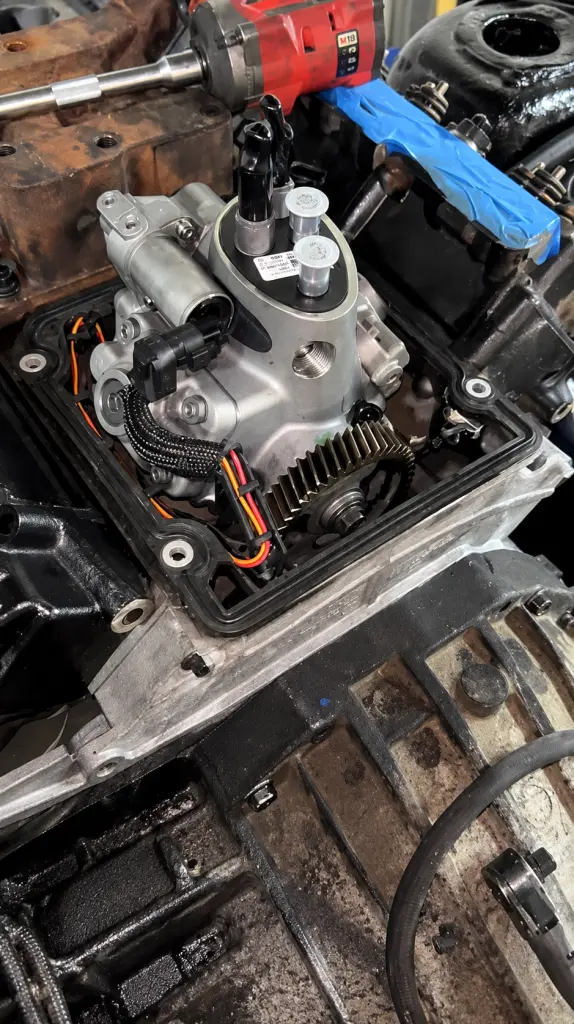
Ford moved to a high-pressure common-rail fuel injection system. Instead of relying on an HPOP to actuate the injectors, the 6.4 uses a high-pressure fuel pump to generate the tremendous fuel pressure required by its electronically controlled injectors.
This gave the 6.4 excellent performance potential, but it also made fuel quality, filtration, low-pressure fuel supply, and fuel-system health extremely important.
6.4 Powerstroke High-Pressure Fuel System
The high-pressure common-rail system is one of the most important—and potentially expensive—systems on a 6.4 Powerstroke.
The high-pressure fuel pump supplies the rails and injectors with the pressure necessary for proper injection. Contamination, water in the fuel, inadequate fuel supply, or internal pump failure can create major problems.
1
In severe cases, a failing high-pressure fuel pump can contaminate other components within the high pressure fuel system.
That’s why we don’t approach a low-fuel-pressure, hard-start, no-start, or poor-running 6.4 by simply replacing parts.
Proper fuel-system diagnostics are critical.
Fuel quality, low-pressure supply, commanded versus actual rail pressure, pump operation, injectors, and the presence of contamination all need to be considered before determining the proper repair.
The Factory Compound Turbo System
The 6.4 Powerstroke also brought one of the most interesting factory turbocharger systems ever installed on a Powerstroke:
Compound turbos.
The factory system combines a larger fixed-geometry low-pressure turbocharger with a smaller variable-geometry high-pressure turbocharger.
The smaller high-pressure VGT helps provide quick response, while the larger low-pressure turbo supports airflow as engine load and power demand increase.
When everything is working properly, the result is impressive turbo response and excellent power potential. It’s one of the characteristics that makes the 6.4 such an interesting performance platform. 6.4 Powerstroke Turbo Diagnostics & Repair
The downside to having two turbochargers and a more complex air-management system is that there are more components that can develop problems.
Turbocharger failures, VGT concerns, exhaust leaks, damaged or leaking up-pipes, boost leaks, sensor issues, and other air-management problems can all create low-power or boost-related complaints.
That’s why a boost concern shouldn’t automatically result in replacing turbochargers.
We evaluate the complete air and exhaust system to determine what’s actually preventing the engine from performing correctly.
The 6.4 Powerstroke’s Reputation
The 6.4 was supposed to represent a fresh start after many of the problems associated with the 6.0 Powerstroke.
2.Unfortunately, the 6.4 developed serious problems of its own. Some of the concerns we commonly associate with this platform include:
- High-pressure fuel pump failures
- Fuel-system contamination
- Injector concerns
- Oil cooler restrictions and failures
- EGR-system problems
- Turbocharger failures
- Exhaust up-pipe leaks
- Cooling-system concerns
- Fuel dilution of the engine oil
- Excessive crankcase pressure and blow-by
- Piston and other internal engine damage
- DPF and regeneration-related concerns
Some of these failures can become extremely expensive very quickly. This is why evaluating the overall condition of the engine before beginning a major repair is so important on a 6.4 Powerstroke.
Blow-By & Base Engine Health
One area we take particularly seriously on the 6.4 is base engine condition.
If a truck comes in needing a significant repair, we don’t want to overlook signs that the engine itself may already have internal damage.
Excessive crankcase pressure or blow-by can indicate problems with cylinder sealing, pistons, rings, or other internal engine components.
Before investing heavily into certain repairs or performance upgrades, evaluating base engine health can help determine whether repairing the existing engine makes sense—or whether a more extensive engine repair or replacement should be considered.
There’s no benefit in installing thousands of dollars in parts on an unhealthy foundation. Oil Cooler & Cooling-System Concerns
The 6.4 continued to use an engine oil cooler design that can develop restrictions and cooling-related problems.
Oil temperature, coolant temperature, coolant condition, cooling-system performance, and the health of the oil cooler all need to be considered when evaluating these trucks.
Ignoring cooling-system problems can contribute to much larger and more expensive failures. 3
Proper maintenance and early diagnosis are especially important on this platform. Maintenance Matters on the 6.4
If you own a 6.4 Powerstroke, maintenance isn’t something we recommend stretching.
Clean engine oil, quality filters, proper cooling-system maintenance, good fuel, regular fuel-filter service, and water management within the fuel system are extremely important.
These engines have expensive high-pressure fuel-system components, two turbochargers, complex emissions equipment, and internal components that can suffer significant damage when problems are ignored.
Preventative maintenance is considerably less expensive than repairing a contaminated fuel system or replacing an engine.
6.4 Powerstroke Diagnostics
Because of the complexity and potential repair costs of this platform, diagnostics should come before parts replacement.
Depending on the complaint, our diagnostic process can include evaluating:
- Low-pressure fuel supply
- High-pressure fuel operation
- Desired versus actual fuel rail pressure
- Injector operation
- Fuel-system contamination
- Turbocharger operation
- VGT operation
- Boost and exhaust pressure
- Intake and exhaust leaks
- Engine oil and coolant temperatures
- Cooling-system performance
- DPF and regeneration operation
- Crankcase pressure and blow-by
- Compression and overall base engine condition
The goal is to understand why the truck is failing, not simply replace the component associated with a fault code.
The Other Side of the 6.4 Powerstroke: POWER
For all of its faults, there’s one characteristic of the 6.4 Powerstroke that’s difficult to ignore: These engines can make serious power.
4. The combination of high-pressure common-rail injection and factory compound turbochargers gave the 6.4 tremendous performance potential.
Even from the factory, the engine produced approximately 350 horsepower and 650 lb-ft of torque, and the platform became well known in the diesel-performance world for responding aggressively to modifications.
When starting with a healthy engine and using the correct combination of parts, a 6.4 can be an incredibly powerful truck.
6.4 Powerstroke Performance Upgrades
Before we start chasing horsepower on a 6.4, we want to know what we’re working with. Base engine health comes first.
Once we’ve determined that the engine is a good candidate for performance modifications, we can build a combination around the customer’s goals.
Performance upgrades may include:
- Turbocharger upgrades
- Compound turbo upgrades
- Fuel-system upgrades
- Injector upgrades
- Airflow improvements
- Intercooler and charge-air upgrades
- Exhaust improvements Engine internal upgrades Monitoring systems
- Transmission upgrades
- Supporting reliability upgrades
As power increases, supporting modifications become increasingly important. The goal isn’t simply to make a big horsepower number.
It’s to build a combination where the engine, fuel system, airflow, turbochargers, cooling system, and drivetrain work together.
Repair It Right—or Know When Not To
This is especially important with the 6.4 Powerstroke.
Not every truck should receive the same repair.
5.If the base engine is healthy and the rest of the truck is worth investing in, repairing and upgrading the platform may make sense.
If testing reveals excessive blow-by, internal engine damage, severe fuel-system contamination, or multiple major systems approaching failure, the conversation may need to be different.
At Southern Truck Pros, our job isn’t simply to sell you a repair.
Our job is to properly evaluate the truck, explain what we find, and help you determine the best direction to take with it.
Don’t Underestimate a Healthy 6.4 Powerstroke
The 6.4 Powerstroke earned a difficult reputation—and many of the concerns surrounding the platform are legitimate.
But that’s only half of the story.
The 6.4 introduced common-rail fuel injection, factory compound turbocharging, excellent turbo response, and tremendous horsepower potential to the Powerstroke platform.
A healthy 6.4 with the right combination can be an incredibly strong-running truck. The key is knowing what you’re starting with.
Whether you need 6.4 Powerstroke diagnostics, high-pressure fuel-system repair, turbocharger repair, oil cooler service, cooling-system repairs, engine replacement, base engine testing, or performance upgrades, Southern Truck Pros has the experience to properly evaluate the platform and help you determine the right path forward.
Diagnose it correctly. Know the condition of the engine. Then decide how far you want to take it.
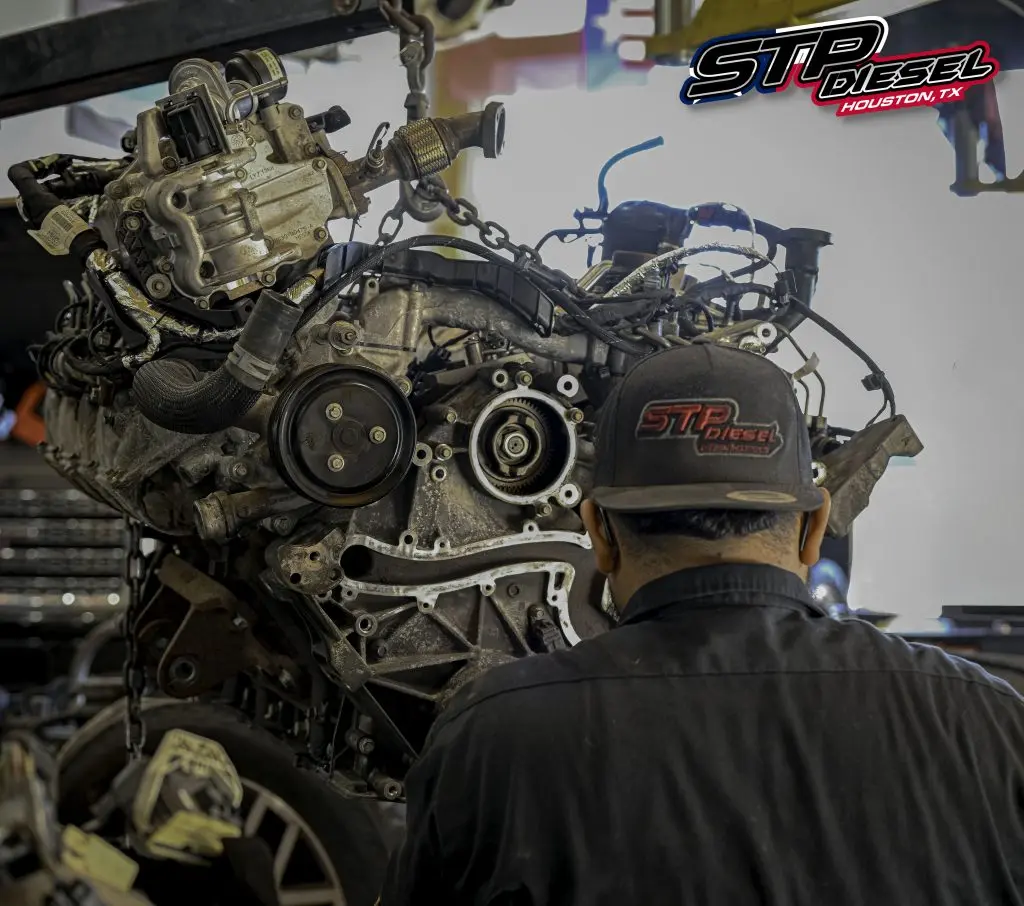
6.7L Powerstroke Diesel Repair & Performance Specialists
The 6.7L Powerstroke marked the beginning of a new era for Ford diesel trucks.
Introduced for the 2011 model year, the 6.7 Powerstroke—also known as the Scorpion—was the first Powerstroke diesel engine designed and manufactured in-house by Ford rather than supplied through its previous engine partnership.
And Ford got a lot right.
The 6.7 Powerstroke has developed into what we consider one of the best diesel platforms Ford has produced. It combines excellent power, smooth drivability, strong towing capability, modern common-rail fuel injection, and tremendous performance potential.
At Southern Truck Pros, we have extensive experience diagnosing, repairing, maintaining, and upgrading 6.7 Powerstroke trucks. From a completely stock work truck to a modified performance build, we understand the systems that make these engines work and the common problems that can develop as they age.
A New Generation of Powerstroke
The 6.7 represented a major departure from previous Powerstroke engines.
Ford designed an entirely new diesel engine featuring modern high-pressure common-rail fuel injection, advanced turbocharger technology, updated emissions controls, and a completely new engine architecture.
The result was an engine that delivered something previous Powerstroke platforms sometimes struggled to combine:
Power and refinement.
The 6.7 produces strong low-end torque, excellent throttle response, smooth power delivery, and great drivability while still being capable of handling demanding towing and work applications.
And as Ford continued developing the platform, it only became better.
6.7 Powerstroke Common-Rail Fuel System
One of the most important systems on the 6.7 Powerstroke is its high-pressure common-rail fuel system. At the center of the system on many 6.7 applications is the Bosch CP4 high-pressure fuel pump.
1.The CP4 takes incoming low-pressure diesel fuel and generates the extremely high fuel pressure required by the common-rail injection system. That pressure is supplied to the fuel rails, where electronically controlled injectors precisely deliver fuel into each cylinder.
When operating correctly, the system provides excellent power, efficiency, response, and precise control over the combustion process.
However, the CP4 also has a weakness every 6.7 Powerstroke owner should understand. CP4 High-Pressure Fuel Pump Failure
The CP4 high-pressure pump can experience internal mechanical failure.
When that happens, the problem may extend far beyond simply replacing the pump.
An internally failing CP4 can produce metallic debris that travels throughout the high-pressure fuel system. Once contamination is distributed through the system, components such as the fuel rails, injectors, high pressure lines, and other fuel-system components can become contaminated.
What started as one failed pump can quickly become a complete fuel-system repair.
Symptoms can vary and may include hard starting, extended cranking, low fuel-rail pressure, poor performance, fault codes, abnormal operation, or a complete no-start.
This is why proper diagnosis and inspection are extremely important.
A fuel-pressure code doesn’t automatically tell you which component failed or why it failed.
Our job is to determine what happened, evaluate the extent of the failure, and recommend the correct repair.
Protecting the 6.7 Powerstroke Fuel System
Fuel quality and proper maintenance are extremely important on a modern common-rail diesel.
Contaminated fuel, water, poor filtration, restricted supply, and other fuel-related issues can create expensive problems.
We strongly believe in maintaining these trucks with quality fuel filters and proper service intervals, while paying attention to signs of water or contamination within the system.
For customers concerned about the factory CP4, there are also aftermarket solutions available that can provide additional protection or replace the factory pump design altogether.
2. Depending on the truck and customer’s goals, we can discuss CP4 protection and alternative high pressure fuel-pump options, including conversion systems designed specifically for the 6.7 Powerstroke.
CP4 to DCR Fuel Pump Conversions
One increasingly popular option for 6.7 Powerstroke owners is replacing the factory CP4 with an aftermarket DCR high-pressure fuel pump conversion.
The purpose of these systems is to eliminate the factory CP4 pump and replace it with an alternative high pressure pump design while maintaining the common-rail injection system.
For owners planning to keep their trucks long-term—or customers who simply want additional peace of mind regarding the factory CP4—this can be an upgrade worth considering.
At Southern Truck Pros, we can help determine whether a DCR conversion or other fuel-system upgrade makes sense for your particular truck and application.
Early 6.7 Powerstroke Turbocharger Concerns
The early 2011–2014 6.7 Powerstroke trucks used a unique turbocharger configuration that helped provide quick response but developed a reputation for limitations and failures, especially as trucks were modified or operated under demanding conditions.
Ford made a significant change beginning with the 2015 model year, moving to an updated turbocharger design.
The later turbo setup proved to be a major improvement and helped make the newer 6.7 Powerstroke trucks even better performers.
Later-model 6.7s offer excellent turbo response, strong airflow, impressive towing performance, and great power potential.
For earlier trucks, turbocharger upgrades and later-style conversion options can also completely change how the truck performs.
6.7 Powerstroke VGT Turbo System
Like the 6.0 Powerstroke before it, the 6.7 uses Variable Geometry Turbocharger technology.
The VGT system allows the engine management system to adjust turbocharger operation based on engine speed, load, boost demand, exhaust conditions, and numerous sensor inputs.
This gives the 6.7 excellent response across a wide operating range.
However, proper turbocharger operation still depends on the entire system working correctly. 3
Boost leaks, exhaust leaks, sensor problems, actuator concerns, sticking vanes, damaged turbochargers, intake restrictions, and emissions-system issues can all affect performance.
That’s why proper diagnostics should always come before turbo replacement. The Introduction of DEF
The 6.7 Powerstroke also introduced Ford Super Duty owners to another major change: Diesel Exhaust Fluid, or DEF.
The 6.7 uses Selective Catalytic Reduction (SCR) as part of its emissions-control strategy. DEF is injected into the exhaust stream to help reduce nitrogen oxide emissions.
The complete emissions system works together with components including the DPF, SCR catalyst, DEF system, NOx sensors, temperature sensors, EGR system, and engine-management system.
When everything is functioning correctly, these systems operate largely in the background. When something isn’t working correctly, however, proper diagnostics become extremely important.
A DEF or emissions warning doesn’t automatically mean the DEF pump has failed. Sensors, injectors, heaters, wiring, catalysts, exhaust leaks, contamination, and other components can produce similar symptoms.
Testing the system before replacing parts can save a tremendous amount of money. 6.7 Powerstroke Diagnostics
The 6.7 is an advanced diesel platform, and modern diesel diagnostics require more than simply reading fault codes.
Depending on the concern, our diagnostic process may include evaluating:
- Low-pressure fuel supply
- High-pressure fuel operation
- Desired versus actual fuel-rail pressure
- CP4 high-pressure pump operation
- Fuel-system contamination
- Injector operation and contribution
- Turbocharger and VGT operation
- Boost and exhaust pressure
- Intake and charge-air leaks
- EGR operation
- DPF operation and
- regeneration DEF and
- SCR operation
- NOx sensor performance
- Engine oil and cooling-system operation
- Electrical and sensor data
- Compression and base engine condition
Our focus is always the same:
Find the cause of the problem before recommending the repair.
6.7 Powerstroke Maintenance & Reliability
Despite the complexity of a modern diesel engine, the 6.7 Powerstroke has proven itself to be an extremely capable platform.
Proper maintenance remains one of the biggest factors in keeping one that way.
Quality engine oil and filters, regular fuel-filter replacement, proper cooling-system maintenance, clean fuel, transmission service, and addressing small problems before they become major failures can go a long way toward keeping these trucks dependable.
And because many 6.7 trucks are used for towing, commercial work, fleets, and heavy-duty applications, maintenance should be based on how the truck is actually being used, not simply mileage.
6.7 Powerstroke Performance Upgrades
One of our favorite characteristics of the 6.7 Powerstroke is its performance potential.
These trucks already make impressive power from the factory, but the platform has tremendous aftermarket support for customers looking for even more.
Depending on the customer’s goals and application, upgrades can include:
- Upgraded turbochargers High-flow intercoolers
- Charge-air piping
- Cold-air intake systems
- Intake manifold upgrades
- Fuel-system upgrades
- DCR high-pressure pump conversions
- Upgraded fuel delivery
- Performance transmission upgrades
- Cooling-system upgrades
- Suspension and traction upgrades
- Monitoring systems
Additional supporting modifications
5.Whether you’re building a stronger tow rig or a performance-oriented street truck, the combination matters.
More power places additional demand on the fuel system, turbocharger, cooling system, transmission, and drivetrain.
We build around the complete truck—not simply a horsepower number.
From Tow Rig to Serious Performance Truck
The 6.7 Powerstroke is unique because it can perform extremely well in so many different roles.
A properly equipped truck can be a comfortable daily driver during the week, tow significant weight when needed, and still deliver impressive performance when you put your foot down.
For customers wanting more, these engines can be transformed into seriously powerful trucks with the correct supporting modifications.
Turbocharger selection, fuel supply, high-pressure fuel capability, airflow, cooling, transmission capability, and the intended use of the truck all need to work together.
Power is easy to chase. Building the right combination takes experience.
One of Ford’s Best Powerstroke Platforms
Every Powerstroke generation has its strengths and weaknesses.
The 6.7 is no exception.
The CP4 fuel system deserves attention. Early turbocharger designs had weaknesses. Modern emissions systems add complexity. And as these trucks accumulate mileage, proper diagnostics and preventative maintenance become increasingly important.
But when you look at the complete package, the 6.7 Powerstroke has proven itself to be one of Ford’s best diesel platforms.
It delivers excellent power, drivability, towing capability, refinement, and enormous performance potential— and Ford has continued improving the platform throughout its production.
At Southern Truck Pros, we understand these trucks from factory diagnostics and maintenance to complete performance builds.
Whether you need 6.7 Powerstroke diagnostics, CP4 fuel-system repair, DCR conversion, turbocharger replacement or upgrades, DEF and emissions diagnostics, engine repairs, oil-leak repairs,
6.maintenance, cooling upgrades, or performance modifications, we have the experience to help you get the most out of your truck.
Maintain it correctly. Diagnose it correctly. Upgrade it correctly. Then experience what the 6.7 Powerstroke is capable of.
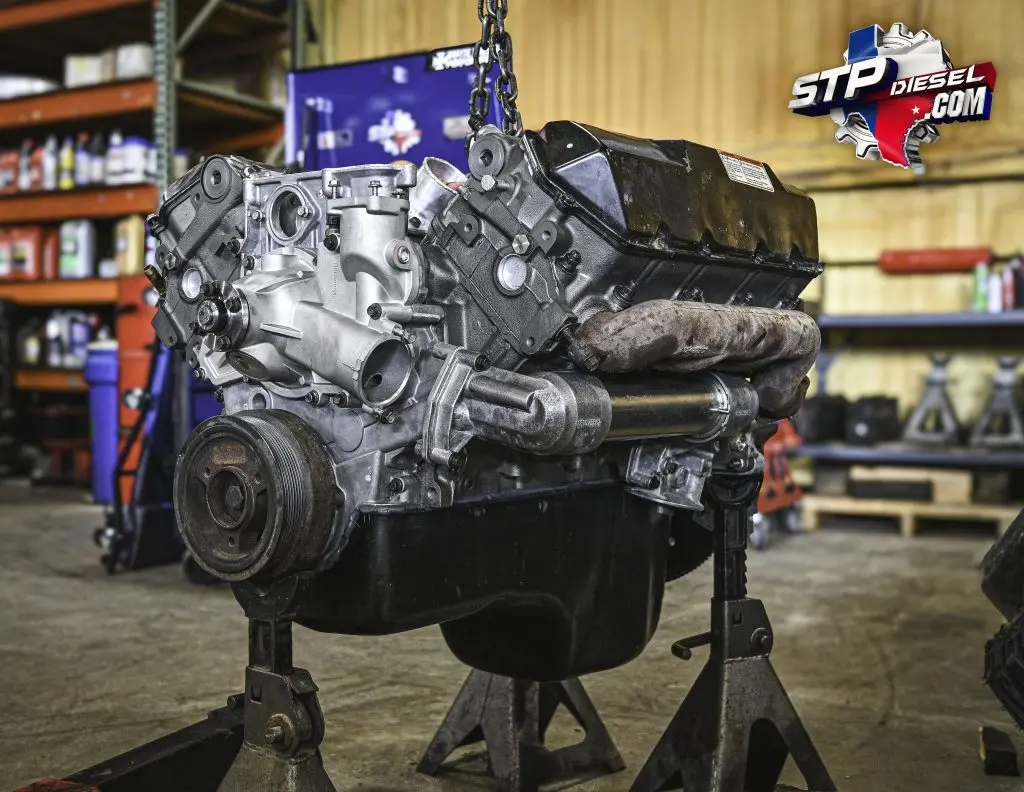
7.3L Powerstroke Diesel Repair & Performance Specialists
At Southern Truck Pros, we have years of hands-on experience diagnosing, repairing, maintaining, and upgrading the legendary 7.3L Powerstroke diesel. These trucks have been around for decades, and our experience with the platform allows us to understand not only how to repair them, but how to keep them reliable and how to make them perform significantly better than they did from the factory.
Whether your 7.3 Powerstroke is a daily driver, work truck, tow rig, or a project you’re looking to bring back to life, our team can help you get the most out of this proven platform.
Understanding the 7.3 Powerstroke
One of the biggest differences between the 7.3 Powerstroke and newer common-rail diesel engines is its HEUI fuel injection system.
Instead of relying solely on extremely high fuel pressure to operate the injectors, the 7.3 uses high-pressure engine oil to hydraulically actuate the fuel injectors. The High Pressure Oil Pump (HPOP), Injection Pressure Regulator (IPR), ICP sensor, injectors, fuel supply system,
engine oil system, and electronics all have to work together correctly for the engine to start, run and perform properly.
This makes proper diagnostics extremely important. A hard-start, rough-running, low-power or no-start condition isn’t always as simple as replacing an injector or fuel pump. Understanding ICP pressure, IPR operation, HPOP performance, fuel pressure, injector operation and base engine oil pressure is critical to correctly diagnosing these trucks.
7.3 Powerstroke HPOP & HEUI Diagnostics
The high-pressure oil system is the heart of the 7.3 Powerstroke’s HEUI injection system.
When there is a problem with the HPOP, IPR, ICP sensor, injector O-rings, high-pressure oil system, or related components, the symptoms can range from poor performance to extended cranking or a complete no-start condition.
Instead of guessing, we evaluate the system and determine whether the engine is producing and controlling the high-pressure oil needed for proper injector operation.
For performance applications, high-pressure oil becomes even more important. Larger injectors can increase the demands placed on the system, making the condition and capability of the HPOP an important part of a properly matched performance combination.
Maintenance Is Key to 7.3 Reliability
The 7.3 Powerstroke has earned its reputation as one of the most durable diesel engines Ford ever offered, but that doesn’t mean maintenance should be ignored.
Because engine oil plays such an important role in injector operation, oil condition, oil level and proper maintenance can directly affect how the engine starts and runs. Fuel quality, fuel filters, air filtration, cooling-system condition and regular inspections are equally important as these trucks continue to age. The factory service information specifically identifies the high pressure oil system as the hydraulic force used to actuate the HEUI injectors.
Many 7.3 trucks are now more than two decades old. Maintaining the engine is only part of the equation—we also pay attention to aging hoses, seals, wiring, sensors, fuel-system components, turbocharger components and other systems that can affect reliability.
Take care of a 7.3 Powerstroke and it can continue working for many years to come. 7.3 Powerstroke Diagnostics & Repair
Experience matters when diagnosing an older diesel platform.
Our technicians understand the systems these trucks depend on and know how to properly test them instead of simply throwing parts at a problem. Depending on the concern, our diagnostic process can include testing high-pressure oil operation, ICP and IPR performance, fuel pressure, injector operation, electrical systems, turbocharger performance and overall engine health.
We commonly address concerns such as:
- Hard-start and no-start conditions
- Low power and poor acceleration
- Rough running and misfires
- Injector and injector O-ring problems
- HPOP and high-pressure oil concerns
- ICP and IPR issues
- Fuel-pressure and fuel-delivery problems
- Turbocharger and boost concerns
- Oil and fuel leaks
- Glow-plug and cold-start concerns
- Electrical and sensor problems
- Engine repairs and resealing
Waking Up the 7.3 Powerstroke
Reliability is one of the 7.3’s greatest strengths. Factory horsepower isn’t.
Compared with today’s diesel trucks, a stock 7.3 Powerstroke can feel considerably underpowered—especially with larger tires, additional weight or when towing.
That’s where our experience with 7.3 Powerstroke performance upgrades comes in.
Simply installing the biggest injectors or turbo isn’t the right way to build one of these trucks. The combination matters.
Injector size, high-pressure oil supply, fuel delivery, turbocharger airflow, tuning, exhaust flow, transmission capability and the intended use of the truck all need to work together. As injector demands increase, the high-pressure oil system can become an important part of the overall performance combination.
We can build a package around your goals—whether you want better towing performance, quicker response, additional horsepower or a complete performance build.
Popular 7.3 Powerstroke Upgrades
Performance options can include upgraded turbochargers, performance injectors, upgraded HPOP systems, improved fuel-delivery systems, custom tuning, intercooler and intake upgrades, exhaust upgrades, monitoring systems and supporting transmission upgrades.
The goal isn’t simply to install more parts.
The goal is to build the right combination of parts so your 7.3 performs the way it should while maintaining the reliability these engines are known for.
7.3 Powerstroke Injector Upgrades
Injectors can completely change the personality of a 7.3 Powerstroke—but bigger isn’t always better.
Injector selection should be based on how the truck will actually be used. A daily-driven tow rig requires a different combination than a high-horsepower street truck.
We can help select an injector combination based on your goals while considering the turbocharger, HPOP capability, fuel supply, tuning, transmission, and supporting modifications.
Our goal is to build a balanced combination, not simply install the largest injector available. 7.3 Powerstroke Turbo Upgrades
A properly selected turbocharger can make a major difference in how a 7.3 Powerstroke performs.
Turbo selection affects spool-up, throttle response, towing characteristics, exhaust gas temperatures, airflow, and overall horsepower potential.
The right turbo depends heavily on injector size and the intended use of the truck. Installing a turbo that is too large for the combination can sacrifice response, while a turbo that is too small may become a restriction as power increases.
At Southern Truck Pros, we look at the entire combination and help match the turbocharger to the truck—not just the horsepower number you’re trying to achieve.
7.3 Powerstroke Fuel System Upgrades
Performance injectors need a fuel system capable of supporting them.
Maintaining proper fuel supply to the injectors is important for both performance and reliability. As horsepower goals increase, factory fuel-system limitations and the condition of aging components become increasingly important.
Depending on the build, upgrades may include improved fuel delivery, filtration, regulated return systems, pumps, lines, and other supporting components.
A properly designed fuel system helps maintain consistent fuel delivery while giving the injectors the supply they need.
7.3 Powerstroke Custom Tuning
Hardware is only part of a successful performance build.
Proper tuning brings the combination together.
Injector size, turbocharger selection, transmission setup, fuel delivery, intended use, and other modifications all need to be considered when selecting the appropriate calibration.
A towing truck shouldn’t necessarily be calibrated the same way as a performance-oriented street truck.
Our goal is usable power—better throttle response, stronger acceleration, improved towing performance, and a combination that works together correctly.
Complete 7.3 Powerstroke Performance Packages Reliability is one of the 7.3’s greatest strengths. Factory horsepower isn’t.
These engines respond extremely well to the right combination of upgrades. Depending on your goals, a complete 7.3 Powerstroke performance package may include:
- Performance injectors
- Upgraded turbocharger
- HPOP upgrades
- Fuel-system upgrades
- Regulated fuel return
- Intake and intercooler upgrades
- Exhaust improvements
- Custom tuning
- Gauges and monitoring
- Transmission upgrades
- Supporting maintenance and repairs
The important part is making sure everything works together.
Simply putting large injectors, a big turbo, and aggressive tuning on a truck doesn’t automatically create a good build. The injector, turbo, high-pressure oil system, fuel supply, tuning, transmission, and intended use of the truck should all complement one another.
Combination is key—and experience with the 7.3 Powerstroke platform makes the difference.
Towing, Daily Driver & Performance Builds
Not every customer wants the same thing from their 7.3.
Some customers want to keep an original truck reliable for another 100,000 miles. Others want more towing power and better response. Some want to completely transform an older 7.3 into a powerful street truck.
We can build around your truck and your goals.
Whether you’re looking for a dependable daily driver, stronger tow rig, mild performance package, or a complete 7.3 build, we can recommend a combination designed around how you actually use the truck.
Keep Your 7.3 Powerstroke on the Road
The 7.3 Powerstroke may be an older platform, but these trucks still have plenty of life left in them.
Whether you need 7.3 Powerstroke diagnostics, HPOP repairs, injectors, maintenance, engine repairs, turbo upgrades, fuel-system upgrades, or a complete performance build, Southern Truck Pros has the experience to help you do it right.
From keeping an original work truck dependable to completely transforming an older Powerstroke, we’re here to help you get the most out of your 7.3.
Ready to repair, restore, or wake up your 7.3 Powerstroke? Contact Southern Truck Pros today to schedule an appointment or discuss your build.